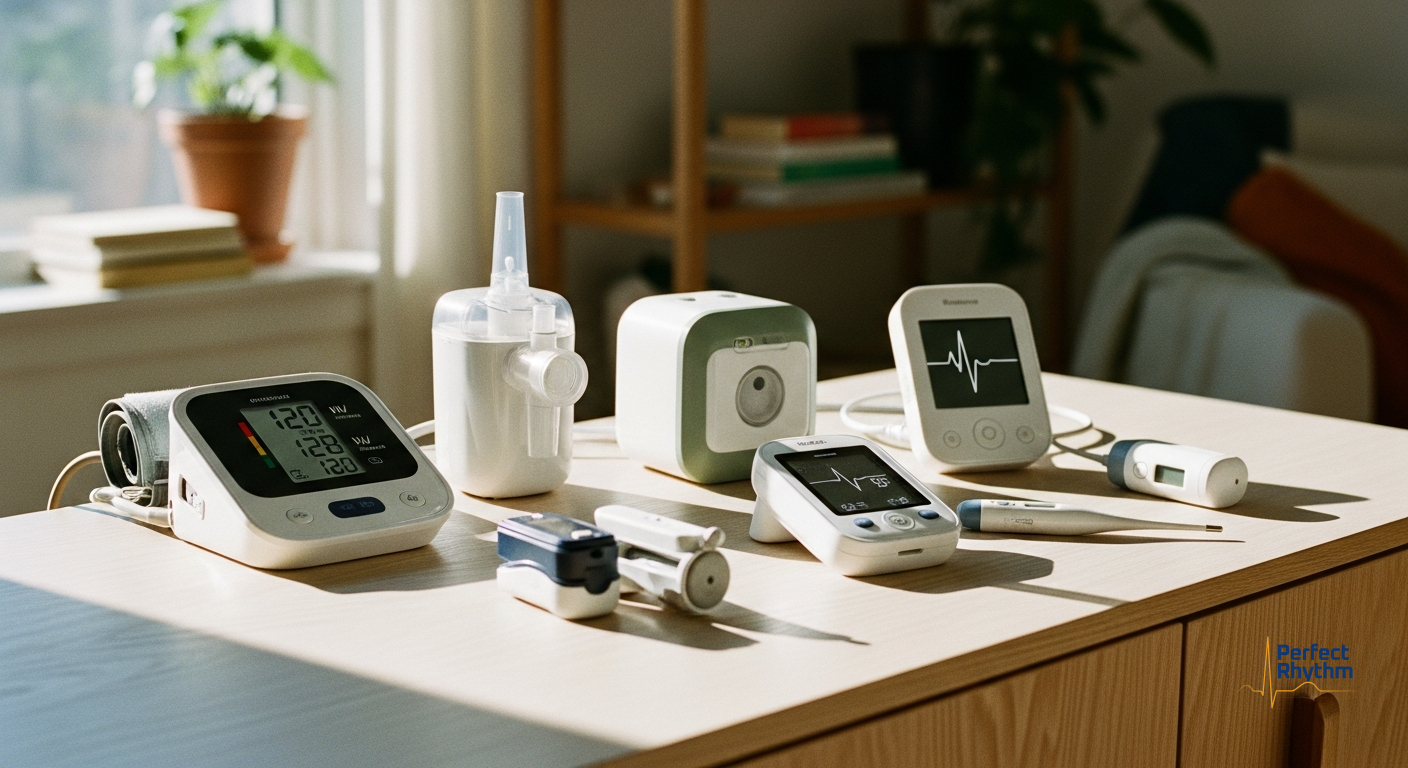
Your Doctor's Toolkit Just Moved Into Your Bedroom—Here's Why
The FDA cleared more than 6,000 medical devices for home use between 2019 and 2023, according to FDA data, yet most Americans have no idea whether the devices they're buying online actually meet federal safety standards. That's not just a consumer confusion problem—it's a patient safety issue.
FDA approved medical devices for home use are therapeutic or diagnostic products cleared by the Food and Drug Administration for consumer operation outside clinical settings, meeting specific safety and efficacy standards for unsupervised use. These range from blood pressure monitors and glucose meters to more advanced equipment like tens units and cardiac monitoring systems.
The home medical device market hit $32.8 billion in 2023, driven by an aging population and the shift toward remote patient monitoring. But here's what most buyers miss: "FDA approved" and "FDA registered" are not the same thing. A registered facility doesn't mean the device itself passed FDA review. According to Mayo Clinic guidance, only devices with 510(k) clearance or PMA approval have actually been evaluated for safety and effectiveness.
For patients with limited access to specialized care, understanding which home devices meet FDA standards isn't academic—it's the difference between legitimate therapy and expensive placebo.
What You Need to Know About FDA approved medical devices for home use
FDA-cleared home medical devices generated over $24 billion in U.S. sales in 2023, according to FDA market data, yet most consumers can't tell the difference between a legitimate therapeutic device and wellness gadget marketing hype. The distinction matters because only FDA-cleared devices have proven clinical efficacy through controlled trials.
The FDA classifies home medical devices into three categories based on risk level. Class I devices like elastic bandages require minimal regulation. Class II devices—which include most therapeutic home units—need 510(k) clearance proving they're as safe and effective as existing approved devices. Class III devices require pre-market approval with extensive clinical trials, though few of these reach the consumer market.
Real FDA clearance means a device submitted technical documentation, safety testing, and clinical evidence to the agency. According to McKinsey research from 2024, the average 510(k) clearance process takes 6-12 months and costs manufacturers $100,000-$500,000. Devices that skip this process and claim to be "FDA-registered" or "FDA-listed" haven't proven anything—those terms simply mean a facility is registered with the FDA, not that any product was evaluated.
Home-use clearance requires additional testing beyond clinical settings. The FDA mandates user comprehension studies proving patients can operate the device correctly without supervision. For microcurrent devices specifically, manufacturers must demonstrate that untrained users can apply electrodes properly and select appropriate intensity levels without causing harm.
The compliance burden explains why legitimate therapeutic devices cost more than Amazon gadgets. As Dr. William Maisel, former FDA Chief Scientist, noted in a New England Journal of Medicine article, the regulatory pathway protects consumers from devices that might delay proper medical care while providing no actual benefit.
Key Strategies and Best Practices
Start by verifying the FDA classification of any device before purchase. The FDA categorizes medical devices into three classes based on risk level, with Class I devices like blood pressure monitors posing minimal risk and Class III devices requiring the most stringent approval process. According to FDA data (2024), over 190,000 medical devices are currently registered for U.S. distribution, but only devices with explicit FDA clearance or approval should be used at home without medical supervision.
Check the device's labeling for the 510(k) clearance number or PMA (Premarket Approval) number. Dr. Jeffrey Shuren, Director of the FDA's Center for Devices and Radiological Health, emphasized in a 2023 statement that patients should "look for devices with clear FDA authorization indicators on packaging and instruction materials." This simple verification step prevents purchasing products marketed with misleading FDA-adjacent language like "FDA-registered facility" when the device itself lacks approval.
Prioritize devices with companion smartphone apps that have separate FDA clearance. The FDA began regulating mobile medical applications in 2013, and according to their 2024 guidance, apps that display or analyze medical device data may require their own regulatory review. Devices with properly cleared software ecosystems typically offer better data accuracy and security protections than standalone units.
Establish a baseline with professional medical testing before relying on home monitoring. A 2023 study published in the Journal of the American Medical Association found that home-use ECG monitors showed 87% concordance with clinical-grade equipment when users had established baseline readings from their physicians. Without that professional comparison point, home device readings can create anxiety or false reassurance.
Document your device readings in a format your healthcare provider can review. Healthcare professionals increasingly incorporate patient-generated health data into treatment decisions, but only when that data comes from validated FDA-approved devices with consistent measurement protocols. Keep dated logs rather than relying solely on app storage, since device manufacturers can discontinue software support without warning.
Common Mistakes to Avoid
Buying devices without FDA clearance or approval is the fastest way to waste money on equipment that doesn't work—or worse, causes harm. According to the FDA's 2024 consumer safety data, nearly 15% of home medical device complaints involve unapproved or counterfeit products purchased online. If a device claims FDA approval but doesn't have a registration number you can verify on the FDA's database, walk away.
Ignoring the distinction between FDA clearance and approval creates confusion about what you're actually buying. The FDA clears most Class II devices like TENS units and blood pressure monitors through the 510(k) pathway, which means they're substantially equivalent to existing devices. Full FDA approval—reserved for Class III devices like pacemakers—involves clinical trials and premarket approval (PMA). A 2023 report from Health Affairs found that 62% of consumers don't understand this difference, leading to unrealistic expectations about device capabilities.
Using devices without reading the instructions for use (IFU) lands people in emergency rooms. Dr. Michael Privitera, Director of the Epilepsy Center at the University of Cincinnati, documented cases where patients misused vagus nerve stimulation devices by adjusting settings beyond safe parameters. The IFU exists because the FDA requires manufacturers to specify safe operating conditions—ignoring it voids any safety guarantees.
Skipping professional consultation before using therapeutic devices at home is medical gambling. The American Heart Association recommends professional training for anyone using cardiac monitoring devices at home, yet their 2024 survey showed only 38% of patients received proper instruction. With aging populations, this gap between device ownership and proper use creates preventable health risks.
Assuming all online sellers are legitimate puts you at risk for counterfeits. The FDA's 2025 enforcement actions shut down 47 websites selling fake FDA-approved devices, many mimicking real manufacturer sites with stolen imagery and fabricated clearance numbers.
How to Get Started
Begin by identifying the specific health condition you need to monitor or treat. According to the FDA's 2024 guidance on home-use devices, consumers should match device selection to a diagnosed medical need rather than purchasing based on general wellness claims. A blood pressure monitor serves someone with hypertension differently than someone buying it "just in case."
Search the FDA's 510(k) Premarket Notification database to verify any device you're considering has legitimate clearance. This public database lists every approved medical device by manufacturer, device name, and clearance number. If you can't find it there, it's not FDA-cleared regardless of what the packaging claims.
Consult your physician before purchasing, especially for diagnostic devices like glucose monitors or cardiac monitors. Dr. Rita Redberg, cardiologist at UCSF Medical Center, has repeatedly emphasized in JAMA Cardiology that home monitoring works best when integrated into a care plan, not used in isolation. Your doctor can recommend specific brands that integrate with their electronic health records system.
Start with one device and master it completely before adding others. The American Heart Association reports that 45% of home blood pressure readings are inaccurate due to user error, not device failure. Read the manual cover to cover. Practice the measurement technique three times daily for a week until your results stay consistent.
Keep a written log even if your device has digital storage. Technology fails. Batteries die. Apps get discontinued. A paper backup creates a permanent medical record you can hand your doctor during appointments without wrestling with Bluetooth connectivity in the exam room.
Local pharmacists can demonstrate proper device use and recommend models that match your insurance coverage for reimbursement.
FDA-cleared home medical devices give you clinical-grade care without the clinic visits. The devices covered here—pulse oximeters, blood pressure monitors, EKG systems, and therapeutic devices like vagus nerve stimulator—represent the current standard for home health management. According to the FDA's 2023 guidance updates, proper device selection and usage compliance remain the two factors that separate effective home monitoring from wasted money and false reassurance.
Start with your specific health goal, not the fanciest device. A Class II FDA-cleared device for heart rhythm tracking serves a different purpose than a basic pulse oximeter, and buying the wrong one delays the care you actually need. Verify clearance numbers on the FDA database before purchase—it takes two minutes and eliminates the risk of buying unregulated garbage marketed as "FDA-approved."
Track your data consistently or don't track at all. Sporadic measurements create noise, not insights. Set a daily schedule, use the same conditions each time, and share results with your healthcare provider during regular check-ins. As Dr. Eric Topol notes in Deep Medicine, patient-generated health data only improves outcomes when it's accurate, consistent, and actually reviewed by someone who can act on it.
Frequently Asked Questions
What does FDA cleared mean for home medical devices?
FDA clearance through the 510(k) process means a device is substantially equivalent to a legally marketed predicate device and meets safety and effectiveness standards. According to the FDA's classification system, Class II devices like blood pressure monitors and therapeutic stimulators require this clearance before sale. It's not the same as FDA "approval," which applies to higher-risk Class III devices.
How do I verify if a home medical device is actually FDA cleared?
Search the device name or manufacturer in the FDA's 510(k) Premarket Notification database. Legitimate manufacturers list their clearance number (K-number) on packaging and product documentation. If you can't find a clearance number or the company won't provide it, don't buy the device.
Can I use FDA cleared home devices without a doctor's prescription?
Most Class I and Class II home-use devices don't require prescriptions—pulse oximeters, blood pressure monitors, and many therapeutic devices are available over-the-counter. However, FDA clearance for home use doesn't replace medical advice. Use these devices as monitoring or therapeutic tools while maintaining regular healthcare provider communication.
What is the difference between FDA cleared and FDA registered?
FDA registration simply means a manufacturer has listed their facility and devices with the FDA—it's an administrative requirement, not a safety endorsement. FDA clearance or approval means the agency has reviewed the device for safety and effectiveness. Registration without clearance means nothing for medical devices marketed for specific health claims.
How often should I replace FDA cleared home medical devices?
Replace devices according to manufacturer guidelines, typically every 2-5 years depending on the type and usage frequency. Accuracy degrades over time, especially for blood pressure monitors and pulse oximeters. According to a 2022 American Heart Association statement, annual calibration checks or replacement every 2-3 years ensures measurement reliability.
