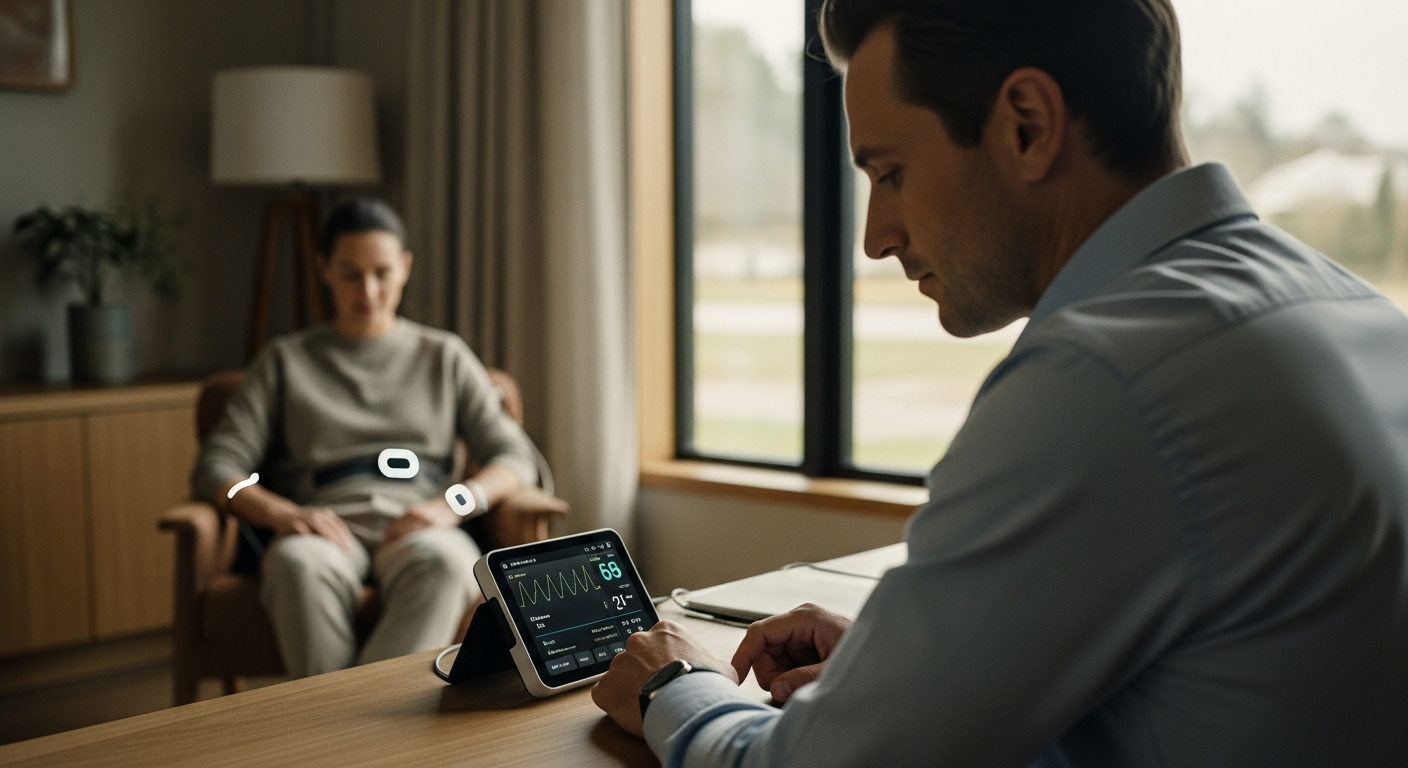
Your Doctor's About to Fit in Your Pocket-Here's Why That's Good News
Your father's blood pressure spikes at 3 AM, and his smartwatch alerts his cardiologist before he even wakes up. His doctor adjusts his medication remotely by 8 AM, preventing what could have been a trip to the ER. This isn't science fiction-it's healthcare in 2026, and it's happening right now in Florence, AL and across the country.
Remote patient monitoring is the use of digital devices to collect health data from patients outside traditional healthcare settings and transmit that information to medical providers for assessment and intervention. According to Research and Markets (2026), the global remote patient monitoring market has reached $63.75 billion this year, up from $55.24 billion in 2025-a 15.4% growth rate that reflects how quickly this technology is moving from experimental to essential.
Nearly 50 million Americans currently use remote patient monitoring devices, according to the Harvard Health Letter (2025). Even more telling: ElectroIQ research (2026) shows that remote monitoring reduces hospital readmissions by up to 38%, with heart failure patients seeing up to 76% reduction in 30-day readmissions. That's not incremental improvement-that's transformation.
2026 matters because three major forces converged this year: Medicare introduced two new billing codes that make remote monitoring financially viable for more providers, clinical evidence proved its effectiveness beyond doubt, and the technology finally became simple enough for your grandmother to use without a computer science degree.
What Is Remote Patient Monitoring? (And Why 2026 Matters)
Remote patient monitoring lets healthcare providers track your vital signs, symptoms, and health data from your own home using connected medical devices. Your blood pressure cuff, glucose monitor, or heart rate sensor transmits readings directly to your doctor's office-no appointment needed, no drive to Birmingham or Huntsville specialists.
The technology isn't new, but 2026 marks a turning point. According to Research and Markets (2026), the global remote patient monitoring market reached $63.75 billion this year, up from $55.24 billion in 2025. Nearly 50 million Americans already use these devices, and 46.3% of U.S. hospitals now offer RPM services.
What changed? Medicare made RPM dramatically more accessible. In January 2026, CMS finalized two new billing codes that let doctors get reimbursed for shorter monitoring periods-as few as 2-15 days of data transmission. According to Rimidi's analysis of the CMS 2026 Physician Fee Schedule, these codes (CPT 99445 and 99470) removed the financial barriers that previously kept intermittent monitoring unprofitable for many practices.
As Dr. Lucienne Marie Ide, founder and CEO of Rimidi, told Medical Economics, "it's probably the biggest changes we've seen in RPM in a couple of years." She's right-these policy shifts mean your local Florence, AL doctor can now monitor you between appointments without losing money on the service.
The clinical evidence backs up the hype. According to ElectroIQ (March 2026), RPM reduces hospital readmissions by up to 38%, with heart failure patients seeing up to 76% reduction in 30-day readmissions. That's not incremental improvement-that's potentially life-saving intervention, delivered from your living room instead of an ER.
The Remote Monitoring Devices You'll See in 2026
Wearable devices dominate the 2026 remote patient monitoring landscape because they deliver continuous data without disrupting daily life. Think beyond the fitness tracker on your wrist. According to Coherent Market Insights (2026), real-time monitoring now holds 63% of the U.S. market share, with devices tracking everything from blood glucose to cardiac rhythms while you sleep, work, or garden.
The biggest winners are diabetes patients. Diabetes monitoring contributes 28.3% of the RPM device market in 2026, driven by continuous glucose monitors that eliminate finger pricks and send alerts before blood sugar crashes or spikes. Medtronic expanded its wearable biosensor integration in February 2026, combining glucose and cardiac monitoring into unified systems that talk to your doctor's office automatically.
Smart patches represent the next evolution beyond wristbands. These adhesive sensors stick to your chest or arm for days or weeks, monitoring heart rhythms, respiratory rates, and body temperature without the bulk of traditional medical equipment. Philips Healthcare launched AI-enabled cardiac patches in March 2026 specifically designed to catch early warning signs of heart failure before patients feel symptoms.
Home monitoring systems bring hospital-quality measurement to your living room. Blood pressure cuffs, pulse oximeters, weight scales, and spirometers now sync wirelessly to cloud platforms that flag concerning trends. Home healthcare settings represent 33.7% of the RPM market in 2026, reflecting a fundamental shift in where chronic disease management happens.
The Mayo Clinic implemented comprehensive home monitoring systems that collect continuous data from chronic and post-acute patients, enabling early interventions that previously required in-person visits. For families in Florence, AL, this means your parent recovering from heart surgery can receive Mayo Clinic-level monitoring without driving to Birmingham or Huntsville.
What makes 2026 different is integration. These devices no longer operate in silos. Your glucose monitor talks to your blood pressure cuff, which talks to your scale, creating a complete health picture that your care team reviews remotely. Nearly 50 million Americans now use these devices, transforming RPM from experimental technology to standard care.
How AI and Smart Technology Are Changing the Game
Artificial intelligence in remote patient monitoring isn't about replacing your doctor-it's about catching problems before they land you in the emergency room. According to ElectroIQ (2026), RPM can reduce emergency room visits by up to 78%, and much of that success comes from AI algorithms that spot dangerous patterns in your health data before you feel sick.
Here's what that looks like in practice: Instead of a glucose monitor just recording your blood sugar levels, AI analyzes those numbers alongside your activity, meals, and medication timing. When it detects a trend toward hypoglycemia three hours before it happens, your care team gets an alert. They call you, adjust your insulin, and you avoid a dangerous episode entirely.
The same technology is transforming heart failure management. HealthArc's 2026 analysis shows that real-time monitoring now captures 63% of the U.S. RPM market precisely because continuous AI surveillance works. Philips Healthcare expanded its AI-enabled remote cardiac monitoring ecosystem in March 2026 specifically to improve early detection of cardiovascular risks-technology that's already helping patients in Florence avoid hospital readmissions.
Machine learning makes these devices smarter every day. Your blood pressure monitor learns your personal baseline, understands that your readings naturally run higher on stressful workdays, and only alerts your doctor when something genuinely abnormal appears. This cuts down on false alarms while catching real problems faster.
The practical result? According to ElectroIQ (March 2026), remote patient monitoring reduces hospital readmissions by up to 38%-and for heart failure patients specifically, that number jumps to 76%. Those aren't incremental improvements. That's AI turning your living room into a hospital monitoring station without requiring you to understand a single line of code.
Real Benefits: What Remote Monitoring Means for You and Your Loved Ones
Remote patient monitoring can reduce hospital readmissions by up to 38%, with heart failure patients seeing up to 76% reduction in 30-day readmissions, according to ElectroIQ (March 2026). For families in Florence, AL, that means fewer emergency drives to Huntsville or Birmingham when a chronic condition flares up-the device catches the problem before it becomes a crisis.
The financial impact is equally dramatic. According to ElectroIQ (March 2026), RPM can save healthcare systems up to $6,500 per patient annually, with expenses for managing chronic diseases reduced by up to 50%. Those savings translate directly to lower insurance premiums and out-of-pocket costs for families dealing with diabetes, hypertension, or heart disease.
The University of Pittsburgh Medical Center equipped patients with remote monitoring devices and tablets for continuous home monitoring. Their program achieved patient satisfaction scores exceeding 90%, proving that people actually like this approach better than traditional care.
Emergency room visits drop by up to 78% when patients use remote monitoring, and medication adherence improves by up to 50%, according to ElectroIQ (March 2026). That second number matters more than most people realize-missing doses is one of the biggest reasons chronic conditions spiral out of control.
For caregivers, the peace of mind is tangible. You can check your parent's vital signs from work instead of calling three times a day. When something actually needs attention, the system alerts their doctor directly-no more guessing whether that shortness of breath warrants a trip to the ER.
HealthSnap deployed their RPM platform for continuous monitoring of patients' vital signs from home and reduced readmissions by up to 30% for patients with conditions like heart failure and diabetes. The key difference: catching small changes before they become hospitalizations.
Addressing the Big Questions: Privacy, Security, and Data Protection
Privacy concerns are the number one barrier keeping patients from adopting remote monitoring technology, and manufacturers know it. According to ElectroIQ (March 2026), 84% of healthcare providers believe RPM improves patient outcomes, but adoption hinges on solving the trust problem-specifically, who sees your health data and how it's protected.
HIPAA compliance is non-negotiable for any legitimate RPM device in 2026. Every device transmitting patient data must use end-to-end encryption, the same technology that protects online banking. Data flows directly from your device to your healthcare provider's secure system, not through unsecured cloud servers or third-party apps that sell information to advertisers.
Here's what changed in 2026: device manufacturers are now required to provide patients with plain-English privacy summaries at setup. No more buried consent forms. You'll see exactly who accesses your blood pressure readings (your doctor and care team), who doesn't (insurance companies can't see real-time data without your explicit consent), and how long data is stored.
The Alabama Department of Public Health's statewide telehealth program, which serves 65 county health departments, operates under the same strict federal privacy standards as hospital-based care. Your glucose readings transmitted from home in Florence, AL receive the same legal protection as data collected during an in-person visit to Huntsville specialists.
One underappreciated safeguard: modern RPM devices don't store complete medical histories locally. If your monitoring watch is lost or stolen, it contains no patient-identifiable information. The device is just a sensor-your actual health records remain secured in HIPAA-compliant medical systems that require multi-factor authentication for access.
Insurance Coverage and Costs: What to Expect
Medicare just made remote patient monitoring far more accessible. In January 2026, CMS introduced two new billing codes-CPT 99445 and CPT 99470-that reimburse providers for shorter monitoring periods. According to Rimidi's analysis of the CMS 2026 Physician Fee Schedule (January 2026), these codes pay approximately $52 and $26 respectively for monitoring as brief as 2-15 days. That's a game-changer for patients recovering from hospitalization or adjusting medications who previously didn't qualify for coverage.
The financial case is compelling. According to ElectroIQ (March 2026), RPM can save healthcare systems up to $6,500 per patient annually, with expenses for managing chronic diseases reduced by up to 50%. For Florence, AL families managing diabetes or heart failure, these savings translate to fewer emergency room visits and hospital stays-costs that insurance doesn't always fully cover.
Nearly 50 million Americans currently use remote monitoring devices, and coverage is expanding rapidly across Medicare Advantage plans and commercial insurers. Most patients with qualifying chronic conditions now face minimal out-of-pocket costs for devices and monitoring services. The catch: your provider needs to actively enroll you and bill properly, which not all practices have adopted yet.
Who Benefits Most from Remote Patient Monitoring?
Heart failure patients see the most dramatic results from remote monitoring. According to ElectroIQ (March 2026), patients with heart failure experience up to 76% reduction in 30-day hospital readmissions when using RPM devices. For a condition that drives billions in readmission costs annually, continuous monitoring catches fluid buildup and irregular heart rhythms before they become emergency room visits.
Diabetes management drives the largest share of the RPM market for good reason. Coherent Market Insights (April 2026) projects diabetes to hold 28.3% of the RPM device market this year. When you're managing insulin, diet, and blood sugar swings, real-time data prevents the guesswork that lands diabetic patients in crisis. That daily finger prick becomes continuous glucose monitoring that alerts you before dangerous highs or lows hit.
Rural communities gain access to specialists they couldn't reach before. Alabama's statewide telehealth program equipped 65 county health departments with digital health equipment, connecting patients to cardiology and specialty care without the two-hour drive to Birmingham or Huntsville. For Florence residents and surrounding Lauderdale County communities, this means your cardiologist can monitor your blood pressure trends from home instead of requiring monthly office visits.
Seniors aging at home represent the fastest-growing user group. Tenovi research (April 2025) found that 90% of older adults prefer aging in place at home, and RPM makes that medically feasible. Your 80-year-old mother maintains independence in her own house while her care team tracks vitals that previously required nursing home admission.
Getting Ready: How to Prepare for Remote Monitoring Technology
Start with your doctor, not Google. Schedule a conversation specifically about whether remote monitoring makes sense for your condition. Ask which devices they already use with other patients, how they'll review your data, and what happens if the device flags a problem at 2 a.m. According to ElectroIQ (March 2026), 84% of healthcare providers believe remote patient monitoring improves patient outcomes-but only if the practice has actual systems in place to respond to the data.
Check your internet situation before committing to any device. Most 2026 RPM systems need consistent WiFi or cellular connectivity to transmit data to your medical team. If you live in rural areas around Florence, AL where internet can be spotty, ask providers about devices with cellular backup or those that store data locally and sync when connection returns.
Understand what you're monitoring and why it matters. If you're tracking blood pressure, learn what your target range is and what numbers should worry you. The Agency for Healthcare Research and Quality (December 2025) found that nearly 1 in 5 patients get readmitted within 30 days-often because they didn't recognize warning signs at home. Remote monitoring only works if you understand what the device is telling you.
Call your insurance before your first appointment. With Medicare's new 2026 billing codes expanding coverage, more plans are paying for RPM-but you need to confirm your specific coverage, any copays, and whether your doctor is enrolled as an RPM provider under your plan.
Remote patient monitoring is no longer a future promise-it's happening right now, and 2026 is the year it becomes standard care for millions of Americans. According to Research and Markets (2026), the global RPM market reached $63.75 billion this year, up from $55.24 billion in 2025. Nearly 50 million people in the United States currently use these devices, and 46.3% of U.S. hospitals now offer RPM services.
What changed? Medicare's January 2026 policy update introduced two new billing codes that make RPM financially viable for more providers and accessible to more patients. According to Rimidi's analysis of the CMS 2026 Physician Fee Schedule, CPT code 99445 now reimburses providers approximately $52 for just 2-15 days of device data transmission, while CPT 99470 pays around $26 for 10-19 minutes of monitoring time. As Dr. Lucienne Marie Ide, founder and CEO of Rimidi, told Medical Economics, these are "probably the biggest changes we've seen in RPM in a couple of years."
The clinical evidence is overwhelming. ElectroIQ research (March 2026) shows that RPM reduces hospital readmissions by up to 38%, with heart failure patients seeing up to 76% reduction in 30-day readmissions. Healthcare systems save up to $6,500 per patient annually, with expenses for managing chronic diseases reduced by up to 50%. For families in Florence, AL and similar communities, this means your loved ones can receive hospital-quality monitoring from home, avoiding long drives to Birmingham or Huntsville specialists while maintaining their independence.
The technology isn't experimental anymore. Mayo Clinic has implemented comprehensive remote monitoring systems for chronic and post-acute disease patients, providing healthcare professionals with continual data for early interventions. The Alabama Department of Public Health operates a statewide telehealth program with 65 county health departments equipped with digital health carts, connecting rural patients with specialists in cardiology, behavioral health, and diabetes education-significantly reducing travel time for patients who can now access care without leaving their county.
This guide has walked you through what remote patient monitoring looks like in 2026-the devices, the AI capabilities, the benefits, and the practical considerations. The bottom line: RPM is transforming from emerging innovation to standard care, and it's ready for everyday use by everyday people managing chronic conditions, recovering from surgery, or simply wanting to age safely at home.
Contact Perfect Rhythm to learn how our remote monitoring solutions can support your healthcare journey. Our team stays current on the latest device innovations and can help you understand which monitoring options align with your specific health needs. Subscribe to our newsletter for the latest updates on medical device technology innovations, or schedule a consultation to discover which remote monitoring devices are right for you. The future of healthcare is here-and it fits in your living room.
Frequently Asked Questions
What are remote patient monitoring devices used for in 2026?
Remote patient monitoring devices track vital signs like blood pressure, blood glucose, heart rate, and oxygen levels from patients' homes and transmit data to healthcare providers in real-time. They're primarily used for managing chronic conditions like diabetes, heart disease, and hypertension, as well as monitoring patients recovering from surgery or hospitalization.
Does Medicare cover remote patient monitoring in 2026?
Yes, Medicare expanded RPM coverage significantly in 2026 with new billing codes (CPT 99445 and 99470) that reimburse providers for shorter monitoring periods. These changes make RPM more accessible to Medicare beneficiaries, with coverage for device setup, data transmission, and provider review time.
How much do remote patient monitoring devices cost?
Costs vary widely depending on the device type and insurance coverage, but many patients pay little to nothing out-of-pocket when Medicare or private insurance covers the service. Providers typically handle device costs and bill insurance for monitoring services, though some patients may face copays depending on their specific plan.
Are remote patient monitoring devices secure and HIPAA compliant?
Yes, medical-grade RPM devices used by healthcare providers must comply with HIPAA regulations and employ encryption to protect patient data during transmission and storage. Reputable manufacturers and healthcare systems implement multiple security layers including encrypted communications, secure cloud storage, and controlled access protocols.
Who benefits most from remote patient monitoring?
Patients with chronic conditions like diabetes, heart failure, and hypertension benefit most, along with seniors who want to age in place, post-surgical patients requiring close monitoring, and people in rural areas with limited access to specialists. Nearly 129 million Americans suffer from at least one chronic disease, making them potential candidates for RPM technology.
