
CARDEA SOLO
Powerful insights.
Unmatched simplicity.
Cadea Solo is a clinically proven, FDA-cleared
ECG system that delivers advanced arrhythmia
detection in a single-lead, easy-to-use device.
CARDEA SOLO
Powerful insights.
Unmatched simplicity.
Cadea Solo is a clinically proven, FDA-cleared. ECG system that delivers advanced arrhythmia detection in a single-lead, easy-to-use device.

CLINICALLY
PROVEN
Trusted by physicians. Validated in clinical studies for accurate arrhythmia detection.

SIMPLE
BY DESIGN
One-touch operation and no wires for maximum patient comfort.

HIGH-QUALITY
DATA
Advanced algorithms deliver clear, actionable ECG insights.

FDA-CLEARED
& RELIABALE
Meets the highest standards for safety, effectiveness, and performance.

SEAMLESS WORKFLOW
Easy data transfer and integration into your clinical workflow.
CLINICALLY
PROVEN
Trusted by physicians.
Validated in clinical studies
for accurate arrhythmia detection.
SIMPLE
BY DESIGN
One-touch operation an
no wires for maximum
patient comfort.
HIGH-QUALITY
DATA
Advanced algorithms
deliver clear, actionable
ECG insights.
FDA-CLEARED
& RELIABALE
Meets the highest standards
for safety, effectiveness,
and performance.
SEAMLESS WORKFLOW
Easy data transfer and
integration into your
clinical workflow.
Advanced Cardiac Monitoring Made Simple
Empowering clinicians with accurate, timely diagnostic solutions that improve patient care and save lives.
99.4%
Analyzable
ECG Data
Maximizes diagnostic quality while
minimizing repeat testing.
96%
Positive
Value
Advanced AI-powered arrhythmia
detection with exceptional accuracy.
1,000,000+
Patients
Monitored
Proven performance across a large
real-world patient population.
Advanced Cardiac
Monitoring Made Simple
Empowering clinicians with accurate, timely diagnostic solutions that improve patient care and save lives.
99.4%
Analyzable
ECG Data
Maximizes diagnostic quality while
minimizing repeat testing.
96%
Positive
Value
Advanced AI-powered arrhythmia
detection with exceptional accuracy.
1,000,000+
Patients
Monitored
Proven performance across a large
real-world patient population.
What is Cardea Solo?
Cardea Solo is a single-lead ECG device that continuously monitors and records heart activity. It is ideal for detecting AFib and other arrhythmias helping you make faster, more informed decisions.
Wear for up to 7 days
Lightweight, discreet, and water-resistant
Designed for real-world use
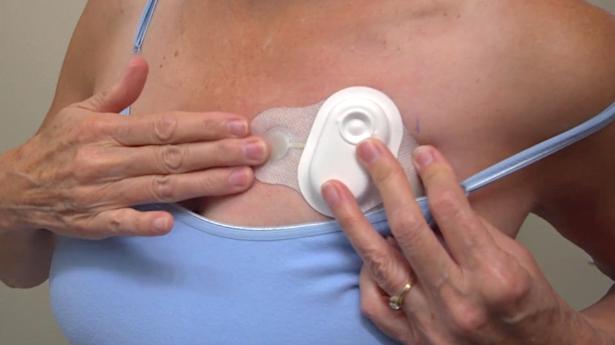
Better data. Better decisions. Better care.
Bring advanced ECG monitoring to your practice with Cardea Solo.
Backed by Science. Built for Confidence.
Cardea Solo is supported by extensive clinical evidence and used by leading healthcare providers to improve patient outcomes.
Clinical Intervention Cardiology
Patient Presentation: The patient reported low blood pressure, dizziness, and an erratic heart rate, with a medical history including hyperlipidemia, hypertension, and chronic chest pain.
Clinical Onset of AF Detected
Patient Background and Clinical Findings:
• The patient presented with hypertension, dyspnea on exertion, and a history of unexplained falls.
• A Cardea SOLO sensor was prescribed to investigate potential arrhythmias.
Clinical Primary Care AF
Diagnostic Process:
After an in-office 12-lead ECG showed normal sinus rhythm, the Primary Care Physician (PCP) opted for a 7-day Cardea SOLO ECG Sensor instead of a traditional Holter monitor to better accommodate the patient's symptom frequency of greater than 48 hours.
Turakhia, M, et al Diagnostic Utility
.Study Overview:
Methodology: Researchers conducted a cross-sectional study of 26,751 patients who received a Zio Patch for clinical indications between January 1 and December 31, 2011.
Device Performance: The Zio Patch is a lightweight, water-resistant, single-lead monitor applied to the left pectoral region.
Backed by Science. Built for Confidence.
Cardea Solo is supported by extensive clinical evidence and used by leading healthcare providers to improve patient outcomes.
Clinical Intervention Cardiology
Patient Presentation: The patient reported low blood pressure, dizziness, and an erratic heart rate, with a medical history including hyperlipidemia, hypertension, and chronic chest pain.
Clinical Onset of
AF Detected
Patient Background and Clinical Findings:
• The patient presented with hypertension, dyspnea on exertion, and a history of unexplained falls.
• A Cardea SOLO sensor was prescribed to investigate potential arrhythmias.
Clinical Primary
Care AF
Diagnostic Process:
After an in-office 12-lead ECG showed normal sinus rhythm, the Primary Care Physician (PCP) opted for a 7-day Cardea SOLO ECG Sensor instead of a traditional Holter monitor to better accommodate the patient's symptom frequency of greater than 48 hours.
Turakhia, M, et al Diagnostic Utility
.Study Overview:
Methodology: Researchers conducted a cross-sectional study of 26,751 patients who received a Zio Patch for clinical indications between January 1 and December 31, 2011.
Device Performance: The Zio Patch is a lightweight, water-resistant, single-lead monitor applied to the left pectoral region.
Cardea Process
STEP 1
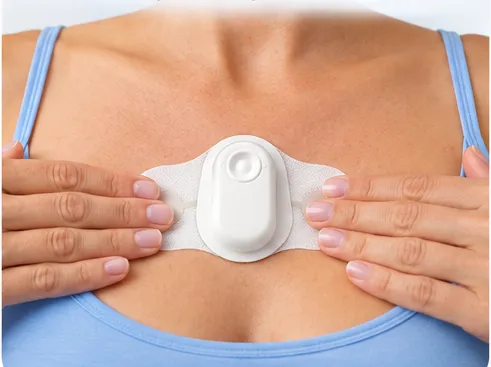
Apply the Cardea SOLO Sensor
The lightweight, water-resistant Cardea SOLO sensor is comfortably applied to the patient's chest and continuously records high-quality ECG data for up to seven days during normal daily activities.
STEP 2
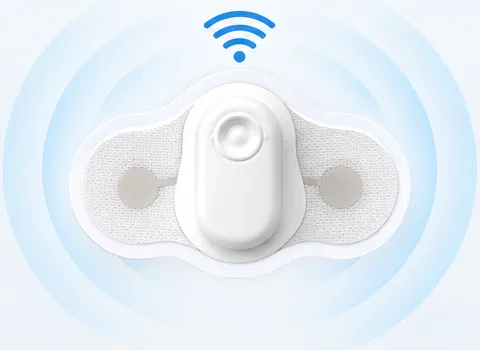
Upload & Analyze ECG Data
The lightweight, water-resistant Cardea SOLO sensor is comfortably applied to the patient's chest and continuously records high-quality ECG data for up to seven days during normal daily activities.
STEP 3
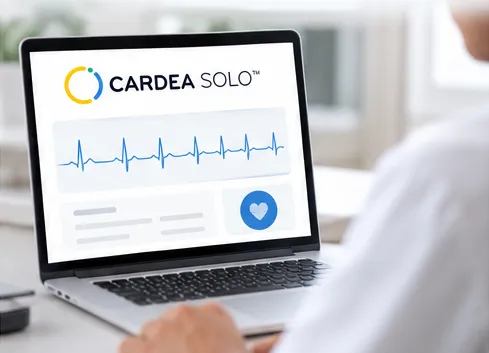
Review Results & Guide Patient Care
Clinicians review the comprehensive diagnostic report, including identified arrhythmias and supporting ECG tracings, enabling timely diagnosis, clinical decision-making, and appropriate treatment planning.
.
Cardea Process
STEP 1
Apply the Cardea
SOLO Sensor
The lightweight, water-resistant Cardea SOLO sensor is comfortably applied to the patient's chest and continuously records high-quality ECG data for up to seven days during normal daily activities.
STEP 2
Upload & Analyze ECG Data
The lightweight, water-resistant Cardea SOLO sensor is comfortably applied to the patient's chest and continuously records high-quality ECG data for up to seven days during normal daily activities.
STEP 3
Review Results & Guide Patient Care
Clinicians review the comprehensive diagnostic report, including identified arrhythmias and supporting ECG tracings, enabling timely diagnosis, clinical decision-making, and appropriate treatment planning.
.
Testimonials
See what our clients have to say
"Cardea SOLO has been a game changer for our practice by giving us immediate access to patient data without relying on third-party monitoring services."
-Cardiology Practice
"The extended monitoring period allowed us to detect paroxysmal atrial fibrillation that would likely have been missed during a traditional 48-hour Holter study."
"The lightweight, wire-free design made it easy for patients to wear during normal daily activities, resulting in excellent compliance and high-quality ECG recordings."
"The ability to review and edit studies in-house provides greater workflow efficiency while accelerating diagnosis and treatment decisions."
— Physician User
"The combination of high-fidelity ECG data and intuitive software enables fast, confident interpretation of complex cardiac rhythms."
Testimonials
See what our clients have to say
"Cardea SOLO has been a game changer for our practice by giving us immediate access to patient data without relying on third-party monitoring services."
-Cardiology Practice
"The extended monitoring period allowed us to detect paroxysmal atrial fibrillation that would likely have been missed during a traditional 48-hour Holter study."
"The lightweight, wire-free design made it easy for patients to wear during normal daily activities, resulting in excellent compliance and high-quality ECG recordings."
"The ability to review and edit studies in-house provides greater workflow efficiency while accelerating diagnosis and treatment decisions."
— Physician User
"The combination of high-fidelity ECG data and intuitive software enables fast, confident interpretation of complex cardiac rhythms."
COMPANY
CUSTOMER CARE
LEGAL
FOLLOW US


Copyright Perfect Rhythm Medical Consultants. 2025 All Rights Reserved.